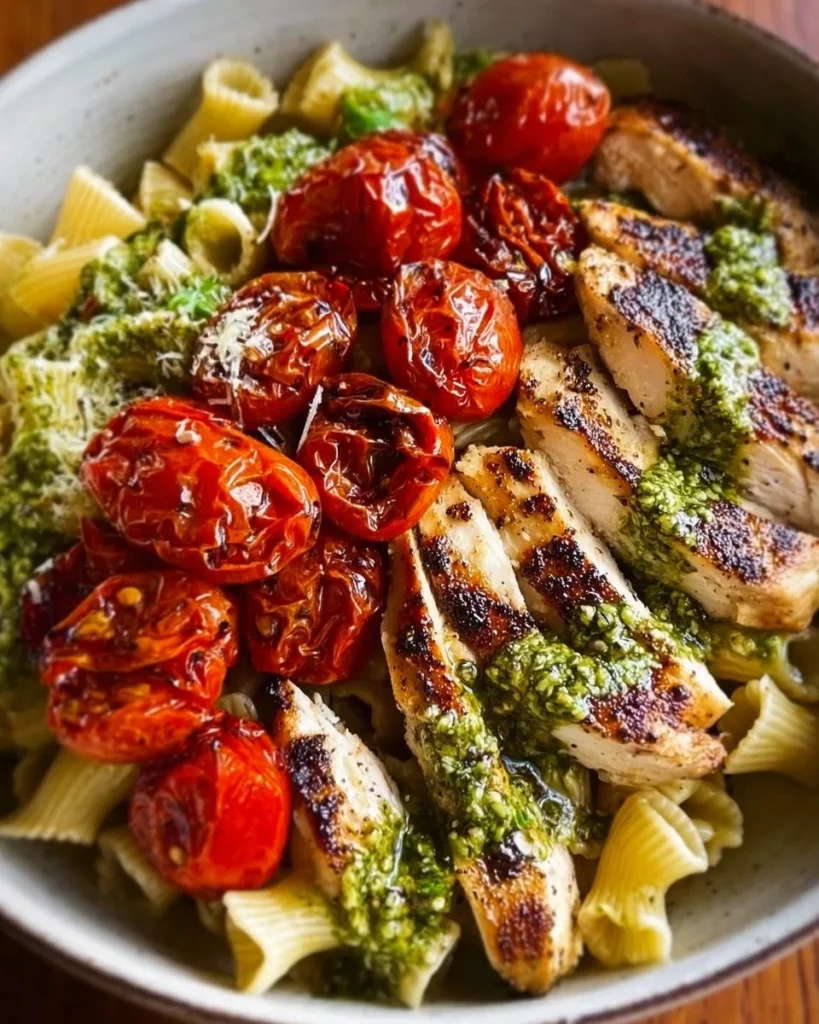
Ready to challenge what “simple pasta” can be?
What if your weeknight dinner could taste like a restaurant dish but take under 40 minutes? Pesto Chicken Pasta with Oven-Roasted Tomatoes rewrites the rule that quick meals are bland. The focus keyword "Pesto Chicken Pasta with Oven-Roasted Tomatoes" appears up front because this recipe is exactly that—bright basil pesto meets sweet, oven-concentrated tomatoes and tender chicken for a balanced, flavor-forward plate. Data shows that home-cooked meals eaten more frequently are associated with better diet quality and lower caloric intake, so investing a little prep time pays off for both taste and health. If you love creamier variations, compare with creamy pesto chicken pasta for another comforting spin on the idea.
Recipe Breakdown
This dish started as a pantry rescue: a jar of pesto, a handful of cherry tomatoes, and a few chicken breasts. Roasting the tomatoes concentrates sweetness and umami, turning them into little flavor bombs that cut through the richness of pesto and cheese. The technique that sets this recipe apart is the two-step flavor layering—first roast, then gently fold—so the tomatoes hold their roasted character without getting soggy in the sauce.
Key ingredients and why they matter:
- Basil pesto (homemade or good-quality store-bought): hits herbaceous saltiness.
- Oven-roasted cherry tomatoes: add concentrated sweetness and acidity.
- Chicken (breast or thigh): lean protein; thighs stay juicier if you prefer more forgiving meat.
- Pasta (penne, fusilli, or farfalle): shapes that trap pesto and roasted juices.
This recipe stands out because it balances texture (creamy pesto, burst tomatoes, al dente pasta) and offers flexibility: swap in gluten-free pasta, use dairy-free pesto, or roast a tray for meal prep. For a different tang, try lemon zest and a splash of juice right before serving, or explore a creamy twist in our riff on chicken pasta salads like the easy creamy chicken caesar pasta salad.
Ingredient List
- 12 oz (340 g) pasta (penne, fusilli, or farfalle)
- 1 lb (450 g) boneless skinless chicken breasts or thighs, cut into 1-inch pieces
- 1 1/2 cups cherry or grape tomatoes, halved
- 3 tbsp olive oil, divided
- 1 tsp salt, divided
- 1/2 tsp black pepper, divided
- 1 cup basil pesto (store-bought or homemade)
- 1/3 cup grated Parmesan (or nutritional yeast for vegan)
- 1/4 cup toasted pine nuts or chopped walnuts (optional)
- 1/4 cup fresh basil leaves, torn
- 1 lemon (zest + optional squeeze)
- Red pepper flakes (optional, to taste)
Creative substitutions and sensory notes:
- For a tangy twist, substitute lemon with lime; lime brightens the pesto and pairs unexpectedly well with roasted tomatoes.
- Want smoky notes? Use fire-roasted cherry tomatoes or a pinch of smoked paprika.
- Health-conscious option: swap half the pasta for chickpea or lentil pasta to increase fiber and protein; expect a slightly firmer bite and nuttier aroma.
Cooking Process and Time Estimates
- Prep time: 10 minutes
- Roast tomatoes: 15–18 minutes
- Cook chicken & pasta: 12–15 minutes (overlapping)
- Total time: 35–40 minutes
Contextual comparison: This dish takes about 35–40 minutes, which is roughly half the time of many slow-cooked pastas and a third of many weekend braises—perfect for weeknights.
Time-saving tips:
- Roast tomatoes while boiling pasta to parallel process.
- Use pre-cooked or rotisserie chicken to shave 10–15 minutes.
- Use store-bought pesto in a pinch; choose a basil-forward jar with good olive oil content.
Step-by-Step Instructions
-
Preheat and prep:
- Preheat oven to 425°F (220°C).
- Toss halved tomatoes with 1 tbsp olive oil, a pinch of salt, and pepper on a rimmed baking sheet. Roast for 15–18 minutes until edges caramelize.
Tip: Line the tray with foil for easy cleanup and a slightly faster roast.
-
Cook pasta:
- Bring a large pot of salted water to a boil and cook pasta to al dente according to package instructions. Reserve 1 cup pasta water, then drain.
Tip: Al dente pasta holds sauce better; test 1–2 minutes before the package time.
- Bring a large pot of salted water to a boil and cook pasta to al dente according to package instructions. Reserve 1 cup pasta water, then drain.
-
Sear chicken:
- While pasta boils, heat 2 tbsp olive oil in a large skillet over medium-high heat. Season chicken with salt and pepper; sear until cooked through (about 5–7 minutes). Remove and set aside.
Tip: Don’t overcrowd the pan—work in batches if needed to get a golden crust.
- While pasta boils, heat 2 tbsp olive oil in a large skillet over medium-high heat. Season chicken with salt and pepper; sear until cooked through (about 5–7 minutes). Remove and set aside.
-
Build the sauce:
- Lower heat to medium. Add a splash of reserved pasta water to the skillet, stir in pesto, then fold in cooked pasta, roasted tomatoes, and chicken. If sauce is too thick, add more pasta water a tablespoon at a time.
Tip: Adding pasta water helps emulsify pesto into a silky sauce—starch + oil = magic.
- Lower heat to medium. Add a splash of reserved pasta water to the skillet, stir in pesto, then fold in cooked pasta, roasted tomatoes, and chicken. If sauce is too thick, add more pasta water a tablespoon at a time.
-
Finish and serve:
- Remove from heat. Stir in grated Parmesan (or nutritional yeast), torn basil, lemon zest, and toasted nuts if using. Adjust salt and pepper.
CTA: Want extra tricks for weeknight dinners? If you want make-ahead tips, see honey mustard chicken pasta salad and adapt the storage strategies.
- Remove from heat. Stir in grated Parmesan (or nutritional yeast), torn basil, lemon zest, and toasted nuts if using. Adjust salt and pepper.
Interactive suggestion: Add step-by-step images showing searing, roasted tomatoes, and the finished toss; consider a short 60-second video showing the final fold for higher engagement.
Nutritional Breakdown
Estimated per serving (serves 4):
- Calories: ~520 kcal
- Protein: 34 g
- Carbohydrates: 52 g
- Fat: 18 g (mostly from olive oil and pesto)
- Fiber: 4–6 g (higher if using legume pasta)
Health insights:
- Basil provides antioxidants; tomatoes add vitamin C and lycopene, a compound linked to heart health.
- Swapping half the pasta for chickpea pasta can increase protein by ~8–10 g per serving.
- Use grilled or roasted chicken to reduce added fats compared with pan-frying in excess oil.
For authoritative nutritional guidance, consult USDA food composition databases or registered dietitian resources for precise macros based on your specific ingredient brands.
Healthier Alternatives
- Gluten-free: Use certified gluten-free pasta; ensure pesto is GF (some store-bought pesto includes additives).
- Vegan: Replace Parmesan with nutritional yeast and use vegan pesto (swap Parmesan for toasted almonds or hemp seeds in homemade pesto).
- Lower-calorie: Reduce oil to 1 tbsp when roasting tomatoes and use half the pesto quantity diluted with reserved pasta water and lemon juice; add extra herbs for flavor without many calories.
- Increased protein: Stir in white beans or use grilled chicken thighs for juicier protein with the same calorie band if portioned.
Impact on taste/texture:
- Chickpea pasta: nuttier, firmer texture.
- Vegan pesto: brighter herbal notes if you use lemon to balance the missing umami of cheese.
- Less oil: lighter mouthfeel; enhance with extra lemon zest or a pinch of salt to maintain flavor.
Creative Serving Ideas
- Weeknight dinner: Serve with a quick arugula salad dressed in lemon vinaigrette for peppery contrast.
- Dinner party: Plate pasta in shallow bowls, top with extra roasted tomatoes, a drizzle of chili oil, and shaved Parmesan; offer crusty bread.
- Comfort version: Stir in a splash of cream or mascarpone and top with garlic-parmesan breadcrumbs.
- Picnic or potluck: Chill and serve at room temperature—pesto pasta improves in flavor when rested a few hours (but keep protein chilled until serving).
Optional garnishes: lemon zest, torn basil, toasted pine nuts, cracked black pepper, or a drizzle of high-quality extra-virgin olive oil.
Mistakes to Avoid
- Overcooking tomatoes: They should blister and concentrate, not turn into sauce. Roast at higher heat for shorter time.
- Using cold pesto straight from fridge: It can clump. Bring pesto to room temp or loosen with warm pasta water.
- Overcooking pasta: Results in mushy texture and poor sauce adherence—aim al dente.
- Not reserving pasta water: This starchy liquid is essential to marry pesto and pasta into a cohesive sauce.
- Skipping seasoning adjustments: Taste and tweak salt/acid at the end—roasted tomatoes can mute saltiness, so a final squeeze of lemon may be needed.
Data insight: Texture contrasts (soft tomatoes + al dente pasta) increase satisfaction and perceived satiety, according to sensory studies on mouthfeel and fullness.
Storing Tips and Meal Prep
- Refrigeration: Store cooled leftovers in an airtight container for 3–4 days. Add a splash of water before reheating to prevent dryness.
- Freezing: Pasta with pesto and chicken freezes okay but roasted tomatoes may lose texture; freeze portions in airtight containers for up to 2 months. Thaw overnight in fridge and reheat gently.
- Make-ahead: Roast tomatoes and cook chicken up to 48 hours in advance. Assemble and finish with pesto just before serving to keep flavors vibrant.
- Reheating: Reheat gently in a skillet over low heat with a splash of water or chicken broth; avoid microwave overheat which can dry proteins.
Conclusion
This Pesto Chicken Pasta with Oven-Roasted Tomatoes is a flexible, flavor-forward weeknight winner—fast enough for busy evenings yet elegant enough for guests. Try the recipe as written, play with the suggested swaps to match dietary needs, and share your tweaks in the comments so others can learn from your variation. For another two-person version of this flavor profile, see the Easy Pesto Chicken Pasta for Two With Oven Roasted Tomatoes and for a baked, cheesy twist check out this Pesto Baked Chicken with Tomatoes and Mozzarella. If you enjoy oven-roasted tomato and pesto combos, you might also like this roasted variation: Roasted Tomato Pesto Pasta.
Frequently Asked Questions
Q: Can I make this ahead of time?
A: Yes — roast tomatoes and cook chicken up to 48 hours ahead. Store separately and combine with pesto right before serving.
Q: Is this recipe freezer-friendly?
A: It freezes, but the texture of roasted tomatoes softens after thawing. For best quality, freeze without pesto and stir in fresh pesto when reheating.
Q: What are good sides for this dish?
A: A peppery arugula salad, garlic-roasted green beans, or a simple cucumber-lemon salad complement the richness. For carbs, garlic bread or a crusty baguette are classic companions.
Q: Can I use jarred pesto?
A: Absolutely. Choose a jar with high olive oil and real basil for the best flavor. If it tastes salty, reduce added salt when finishing the dish.
Q: How do I make it gluten-free or vegan?
A: Use certified gluten-free pasta and swap Parmesan with nutritional yeast or a vegan cheese. Ensure the pesto has no Parmesan (many jarred pestos contain it).
If you try this recipe, drop a note below about the swap you made and how it turned out—your tip could help someone else perfect their weeknight dinner.

Pesto Chicken Pasta with Oven-Roasted Tomatoes
Ingredients
Method
- Preheat oven to 425°F (220°C).
- Toss halved tomatoes with 1 tbsp olive oil, a pinch of salt, and pepper on a rimmed baking sheet. Roast for 15–18 minutes until edges caramelize.
- Tip: Line the tray with foil for easy cleanup and a slightly faster roast.
- Bring a large pot of salted water to a boil and cook pasta to al dente according to package instructions. Reserve 1 cup pasta water, then drain.
- Tip: Al dente pasta holds sauce better; test 1–2 minutes before the package time.
- While pasta boils, heat 2 tbsp olive oil in a large skillet over medium-high heat. Season chicken with salt and pepper; sear until cooked through (about 5–7 minutes). Remove and set aside.
- Tip: Don’t overcrowd the pan—work in batches if needed to get a golden crust.
- Lower heat to medium. Add a splash of reserved pasta water to the skillet, stir in pesto, then fold in cooked pasta, roasted tomatoes, and chicken. If sauce is too thick, add more pasta water a tablespoon at a time.
- Tip: Adding pasta water helps emulsify pesto into a silky sauce—starch + oil = magic.
- Remove from heat. Stir in grated Parmesan (or nutritional yeast), torn basil, lemon zest, and toasted nuts if using. Adjust salt and pepper.
- Want extra tricks for weeknight dinners? If you want make-ahead tips, see honey mustard chicken pasta salad and adapt the storage strategies.