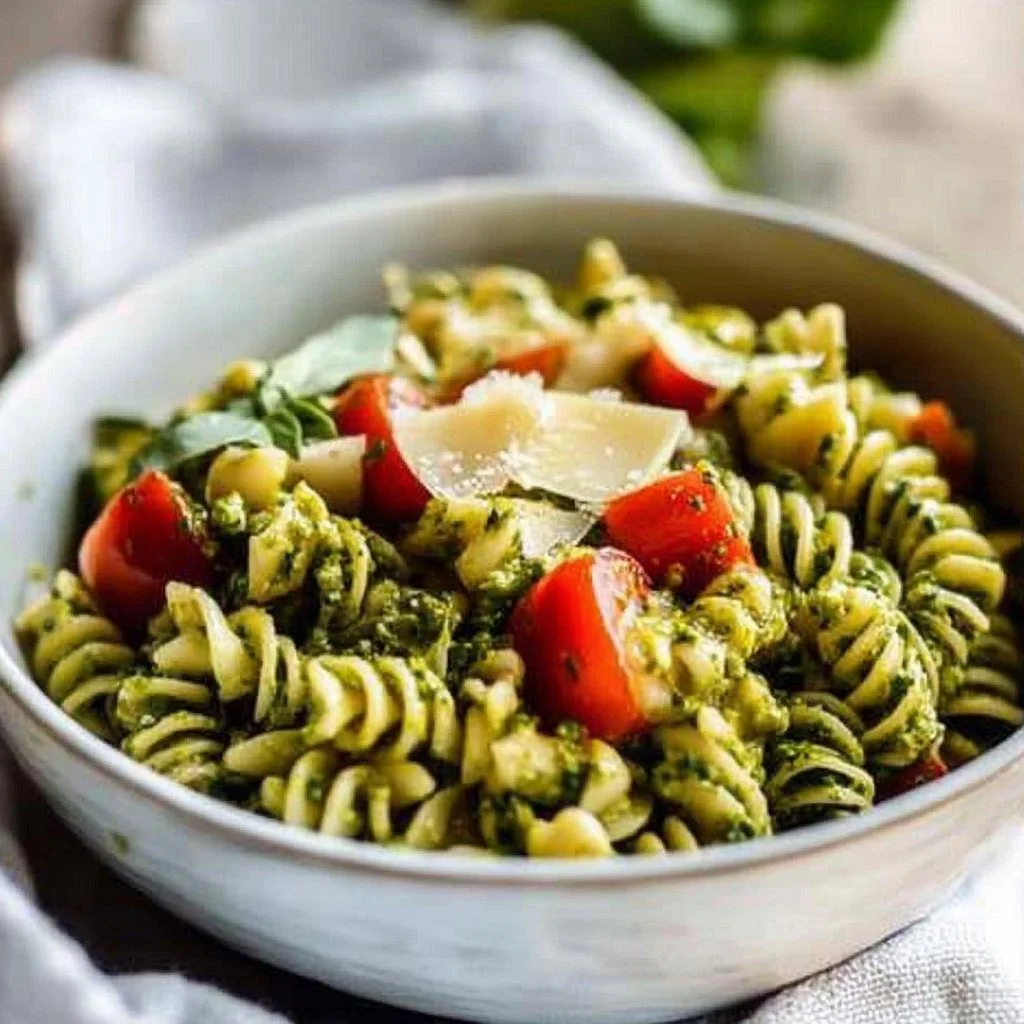
Think pesto pasta salad is just a tacked-on side at picnics? Think again. Pesto Pasta Salad transforms simple pantry staples into a vibrant, crowd-pleasing main or side that travels well, keeps overnight, and scales for two or twenty. In fact, seasonal recipe data shows pasta salads spike in searches during late spring and summer as people look for quick, flavorful dishes under 30 minutes. If you want a recipe that tastes restaurant-level but takes minimal fuss, you’re in the right place—this guide walks you through everything, from sensory ingredient swaps to meal-prep strategies that keep flavor bright.
For a creamy protein-forward pairing that uses similar flavors, check out this creamy pesto chicken pasta — it’s a lovely companion to the salad or inspiration for a heartier version.
Recipe Breakdown
My first pesto pasta salad came from a potluck where everyone brought something safe — except for a jar of homemade basil pesto a friend swore would “steal the show.” It did. What makes this recipe stand out is contrast: herbaceous pesto, al dente pasta, crunchy veggies, and a bright acid finish. Key ingredients include fresh basil pesto (homemade or high-quality jar), short pasta (farfalle, rotini, or gemelli), cherry tomatoes, crisp cucumber, and a sprinkle of toasted nuts for texture. Special techniques: cool the pasta under cold water to stop cooking, whisk extra-virgin olive oil into your pesto for a looser dressing, and toss while slightly warm so the sauce coats evenly.
If you want to build a whole meal around the same flavors later, consider this complementary creamy pesto chicken pasta for a richer entrée.
Ingredient List
- 12 oz short pasta (farfalle, rotini, gemelli) — reserve 1/2 cup pasta water
- 1 cup basil pesto (homemade or store-bought)
- 1 cup cherry tomatoes, halved
- 1 small cucumber, diced (or 1 cup diced cucumber)
- 1/3 cup toasted pine nuts or chopped walnuts (for budget-friendly crunch)
- 1/2 cup shredded or shaved Parmesan (or vegan Parmesan)
- 1 cup baby arugula or chopped fresh spinach
- 2 tbsp lemon juice (or lime for a tangier kiss)
- 2–3 tbsp extra-virgin olive oil (adjust for sauce consistency)
- Salt and freshly ground black pepper, to taste
Sensory notes and substitutions:
- For a smoky, savory variant, swap half the basil for fresh arugula or add charred corn.
- Vegetarian? Keep as-is with toasted pine nuts for richness.
- Vegan option: use nutritional yeast or a vegan grated cheese and swap pine nuts for almonds.
- Health-conscious swap: use whole-wheat or chickpea pasta for extra fiber and protein.
Pro tip: If basil isn’t in season, use pesto made from baby spinach and parsley — it’ll change the color slightly but keep the herb-forward profile.
Cooking Process and Time Estimates
- Preparation time: 10 minutes
- Cooking time: 8–10 minutes (pasta only)
- Total time: ~20 minutes
Contextual comparison: this recipe takes about 20 minutes, which is nearly one-third the time of many baked pasta salads that need 45–60 minutes. That makes it ideal for weeknight dinners or an impromptu potluck contribution.
Time-saving tips:
- Use pre-made pesto when short on time and amp it with fresh lemon juice and a splash of olive oil.
- Toast nuts in a toaster oven or skillet while pasta cooks to multitask.
- Cook pasta in salted boiling water, drain, then rinse under cold water to stop cooking immediately — this prevents mushy pasta in salads.
If you’re expanding this into a main course or batch-cooking, scale ingredients proportionally and keep pasta slightly undercooked (al dente) so it holds texture after dressing.
For inspiration on how these flavors move into heartier plates, see this related recipe on creamy pesto pasta creamy pesto chicken pasta.
Step-by-Step Instructions
- Bring a large pot of salted water to a boil. Add pasta and cook 8–10 minutes until al dente. Drain, reserving 1/2 cup pasta water. Tip: undercook by 30–60 seconds if you’ll refrigerate the salad — it softens slightly while chilling.
- While pasta cooks, halve cherry tomatoes, dice cucumber, and toast nuts in a dry skillet over medium heat for 2–3 minutes until fragrant. Watch closely to avoid burning.
- In a large bowl, whisk pesto with lemon juice and 2 tbsp olive oil. If sauce seems thick, add 2–3 tbsp reserved pasta water until smooth and glossy. Tip: warming the pesto slightly with pasta water helps it coat noodles uniformly.
- Add warm pasta to the bowl and toss gently to combine. Stir in tomatoes, cucumber, arugula, and most of the Parmesan. Taste, then adjust with salt, pepper, or more lemon.
- Transfer to a serving bowl, sprinkle with toasted nuts and remaining Parmesan. Serve immediately or chill for 30 minutes to let flavors meld.
Troubleshooting: If the sauce is too thick, add a splash more pasta water or olive oil. If too thin, fold in a spoonful of grated Parmesan to thicken and bind.
Want more kitchen shortcuts? Try quick-preserve your tomatoes with a sprinkle of sugar and salt to lift their flavor before tossing.
Nutritional Breakdown
Approximate per-serving estimates (based on 6 servings):
- Calories: 320–360 kcal
- Protein: 9–12 g (higher with chickpea pasta or added chicken)
- Carbohydrates: 35–45 g
- Fat: 14–18 g (largely from olive oil and nuts — mostly heart-healthy monounsaturated fats)
- Fiber: 3–6 g (higher with whole-grain or legume-based pasta)
Health insights: Basil and olive oil contribute antioxidants and anti-inflammatory compounds — basil contains essential oils like eugenol and linalool, while olive oil is rich in monounsaturated fats linked to cardiovascular benefits. For deeper reading, nutrition science reviews on Mediterranean-diet components consistently highlight benefits of olive oil and herbs.
Personalized tips:
- If you want higher protein for post-workout recovery, swap regular pasta for chickpea pasta or add grilled chicken.
- To reduce calories without losing flavor, reduce nuts by half and increase crunchy vegetables (bell pepper, celery).
Healthier Alternatives
- Gluten-free: Use a certified gluten-free short pasta (corn, rice, or quinoa blends). Texture will vary — taste test cooking time.
- Vegan: Replace Parmesan with 2–3 tbsp nutritional yeast + a pinch of salt; use vegan pesto or make a walnut-spinach pesto.
- Lower-fat: Use less oil in pesto, add extra lemon juice, and boost vegetable ratio. Expect slightly lighter mouthfeel, offset by extra crunch from raw veg.
- Higher-protein: Use edamame, chickpeas, or shredded rotisserie chicken to increase satiety.
Each swap will subtly shift taste and texture — for example, swapping pine nuts for toasted almonds adds a cleaner crunch and a slightly sweeter note.
Creative Serving Ideas
- Picnic-perfect: Pack chilled in an airtight container with a side of lemon wedges and a small container of extra pesto for drizzling.
- Party bowl: Scatter microgreens, thinly sliced prosciutto, and shaved Pecorino on top for an upscale buffet.
- Lunchbox upgrade: Layer in a mason jar: pesto on bottom, pasta, veggies, and greens on top; shake to combine when ready to eat.
- Comfort pivot: Serve warm with creamy mashed potatoes for an unusual but cozy mash-up.
Optional garnishes: basil chiffonade, a drizzle of aged balsamic, lemon zest, or chili flakes for heat.
Mistakes to Avoid
- Overcooking pasta: leads to mushy texture and soggy salad. Stop cooking a touch early for best results.
- Skimping on acid: pesto can be oily; lemon or vinegar brightens the whole dish.
- Adding dressing too early when fully chilled: cold pasta absorbs less flavor. Dress when slightly warm or just before serving.
- Toasting nuts too long: they can go from fragrant to bitter in seconds — watch and stir frequently.
Real-world tip: If your salad tastes flat, it usually needs one of three things — salt, acid (lemon), or texture (toasted nuts).
Storing Tips and Meal Prep
- Refrigeration: Store in an airtight container for up to 3 days. Keep a small container of extra pesto or olive oil to refresh the salad when serving.
- Freezing: Not recommended for fully dressed pasta salad — pesto can freeze well in ice cube trays for future use but pasta texture suffers after freezing.
- Make-ahead: Cook pasta and mix pesto with lemon in advance; combine with veggies and nuts within 2–4 hours of serving to preserve crunch.
- Reheating: For a warm meal, gently reheat in a skillet with a splash of oil and add fresh greens at the end.
Label leftovers with date and component notes (e.g., “add nuts fresh”) to keep flavor optimal.
Conclusion
Pesto pasta salad is more than a side — it’s a flexible, flavor-forward dish that adapts to diets, scales easily, and suits every mealtime occasion. If you’re looking for more recipes that echo these herb-and-cream flavors, this Pesto pasta salad – RecipeTin Eats version offers a great comparative take on classic ratios. For a wholesome, vegetable-forward take that emphasizes whole ingredients, check out this Pesto Pasta Salad Recipe – Cookie and Kate. And if you like variations that bring party-friendly twists and make-ahead strategies, explore this Pesto Pasta Salad Recipe – Cooking with Cocktail Rings for additional ideas.
Love this recipe? Try it, tweak it, and tell me how you made it yours in the comments — and don’t forget to subscribe for weekly recipe guides and meal-prep hacks.
Frequently Asked Questions
Q: Can I make this pesto pasta salad ahead of time?
A: Yes — for best texture, combine pasta with pesto and refrigerate up to 24 hours, then add crunchy ingredients (nuts, cucumber) right before serving.
Q: What’s the best pasta shape for pesto pasta salad?
A: Short, ridged shapes like rotini, farfalle, gemelli, or cavatappi hold sauce and bits better than thin spaghetti.
Q: Can I use jarred pesto?
A: Absolutely. Boost flavor with fresh lemon juice and a splash of olive oil, and consider stirring in a handful of fresh basil for brightness.
Q: What sides go well with pesto pasta salad?
A: Grilled chicken or shrimp, a chilled soup, crusty bread, or a crisp green salad pair well depending on whether you want a light or hearty meal.
Q: How do I keep the salad from getting oily?
A: Balance the oil with acid (lemon) and use reserved pasta water to emulsify the sauce rather than adding excessive olive oil.
If you enjoyed this guide, share your version on social and tag me — I love seeing your tweaks and flavor mashups!

Pesto Pasta Salad
Ingredients
Method
- Bring a large pot of salted water to a boil. Add pasta and cook 8–10 minutes until al dente. Drain, reserving 1/2 cup pasta water.
- While pasta cooks, halve cherry tomatoes, dice cucumber, and toast nuts in a dry skillet over medium heat for 2–3 minutes until fragrant.
- In a large bowl, whisk pesto with lemon juice and 2 tbsp olive oil. If sauce seems thick, add reserved pasta water until smooth and glossy.
- Add warm pasta to the bowl and toss gently to combine.
- Stir in tomatoes, cucumber, arugula, and most of the Parmesan. Taste, then adjust with salt, pepper, or more lemon.
- Transfer to a serving bowl, sprinkle with toasted nuts and remaining Parmesan. Serve immediately or chill for 30 minutes to let flavors meld.