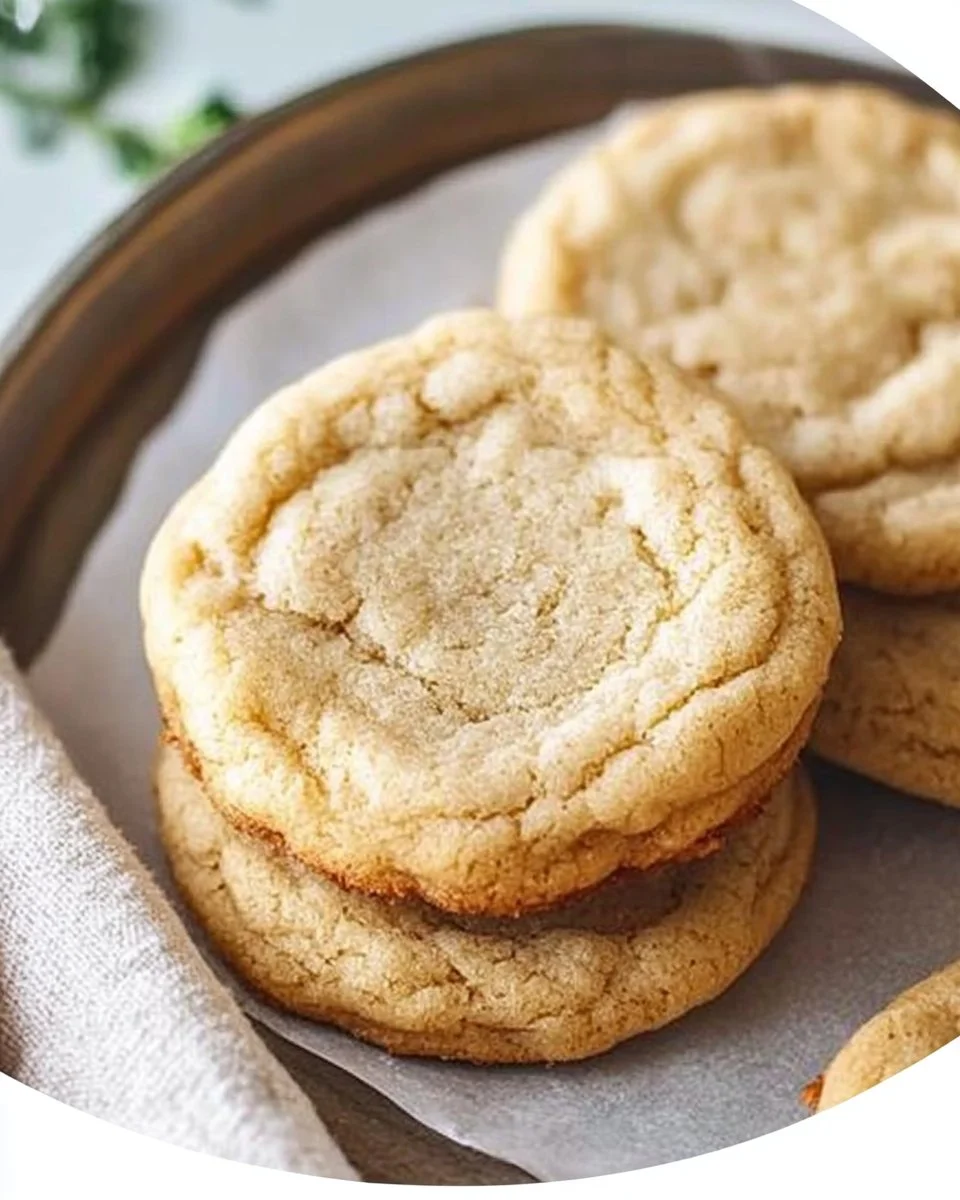
?Ever wondered how to turn sourdough discard into a perfectly tender sourdough discard sugar cookie that’s crisp at the edges and pillowy inside? Using discard in cookies keeps waste down and adds subtle tang that balances the sweetness — all without the wait for a starter-fed dough.
This recipe turns pantry staples into 18 large cookies that are easy to shape, bake one sheet at a time, and store for days. It’s ideal for bakers who want quick results with a little rustic flavor from the discard.
Ingredients List
-
226 grams unsalted butter (2 sticks), cold but softened slightly
- Sensory note: yields rich, buttery flavor and a tender crumb when creamed properly.
- Substitution: European-style butter for more flavor (slightly salt first if using salted); for lower saturated fat, replace up to 25% with applesauce (texture will be slightly different).
-
250 grams cane sugar (for dough)
- Sensory note: gives sweetness and helps structure; creates a fine, tender crumb.
- Substitution: coconut sugar for a deeper caramel note (color will darken).
-
100 grams cane sugar (for rolling)
- Sensory note: adds a crisp, sparkling exterior and extra crunch.
- Substitution: superfine sugar or granulated sugar; for less crunch, omit.
-
2 egg yolks
- Sensory note: enriches color and silkiness; helps with binding without adding extra moisture.
- Substitution: 1 large whole egg (slightly wetter dough) or 2 tbsp aquafaba for egg-free (expect textural differences).
-
75 grams active or discarded sourdough starter (discard)
- Sensory note: brings a gentle tang and depth of flavor.
- Substitution: buttermilk (reduce other liquid slightly) — flavor will be different.
-
1 teaspoon vanilla extract
- Sensory note: rounds flavors and complements the butter and discard.
- Substitution: almond extract (use half amount) or citrus zest for bright notes.
-
300 grams all-purpose flour
- Sensory note: provides structure; yields a soft-but-holdable cookie.
- Substitution: 50–100 g whole wheat pastry flour for nuttiness (use 1–2 tbsp extra liquid if needed).
-
10 grams baking powder (about 2 teaspoons)
- Sensory note: light lift and gentle rise to avoid overly flat cookies.
- Substitution: if using self-rising flour, reduce baking powder (adjust salt too).
-
6 grams fine salt (about 1 teaspoon)
- Sensory note: balances sweetness and enhances butter flavor.
- Substitution: flaky sea salt for sprinkling on top after baking if desired.
Timing
- Preparation time: ~20 minutes (mixing, portioning, and rolling)
- Active baking time: 12–14 minutes per sheet
- Total oven time (three sheets, baked one at a time): ~36–42 minutes
- Total time (start to finish): ~60–70 minutes, including brief cooling between batches
Context: These cookies bake a similar time to classic sugar cookies (10–14 minutes), but because you bake one sheet at a time and chill others, plan for roughly an hour from start to finish for 18 cookies — faster than many decorated cut-out cookies, which often require chilling and multiple bakes.
Step-by-Step Instructions
Preheat and prep
Preheat the oven to 350°F (175°C). Line three baking sheets with parchment paper. If you have three sheets, place them in the fridge so they’ll be chilled while you work.
Make the dough: cream butter and sugar
Combine the 226 g cold-but-softened butter and 250 g cane sugar in a large bowl. Beat until smooth and no lumps remain — about 2–3 minutes by hand or 1–2 minutes with a mixer. Scrape the bowl often for even mixing.
Add egg yolks, sourdough discard, and vanilla
Add the 2 egg yolks one at a time, mixing until incorporated after each addition. Stir in 75 g sourdough discard and 1 teaspoon vanilla extract until fully uniform. The dough will be slightly glossy and soft.
Fold in dry ingredients
Whisk together 300 g all-purpose flour, 10 g baking powder, and 6 g salt. Fold the dry ingredients into the wet mixture until no traces of flour remain — do not overmix. The dough should be cohesive but not sticky; if too soft, chill 10 minutes.
Portion out the dough
Divide the dough into 18 large even portions (about 3 tablespoons each). Use a cookie scoop or a scale for evenness.
Roll in sugar and arrange
Roll each portion in the 100 g cane sugar used for coating until evenly coated. Arrange 6 portions on each parchment-lined baking sheet, spacing them evenly (about 2 inches apart). Avoid overcrowding the cookies.
Bake (one sheet at a time)
Bake one sheet at a time on the middle rack for 12 to 14 minutes, or until edges begin to brown and centers look set. Bake the second and third sheets while chilling the unused sheets in the fridge to keep dough firm and ensure even rise.
Cool on sheet, then transfer
Let the cookies cool and set completely on the hot baking sheet for 5 minutes before moving them to a wire rack to finish cooling. This helps them firm up without breaking.
Serve and store
These cookies taste best at room temperature and develop flavor overnight. Store in an airtight container at room temperature for up to 5 days, or freeze for longer storage.
Nutritional Information (approximate per cookie; 18 cookies total)
- Calories: ~240 kcal
- Fat: ~11 g
- Carbohydrates: ~33 g
- Sugars: ~18–20 g (approximate)
- Protein: ~2–3 g
- Sodium: ~130 mg
Notes: Values are approximate and depend on exact ingredient brands and portion sizes. Lowering sugar or reducing portion size will reduce calories and carbs.
Healthier Alternatives for the Recipe
- Reduce sugar: decrease dough sugar to 200 g and rolling sugar to 50 g for fewer calories and less sweetness.
- Replace up to 25% butter with applesauce to lower saturated fat (expect softer texture).
- Use whole wheat pastry flour for extra fiber (start with 25% substitution).
- Swap half the cane sugar for coconut sugar for a lower glycemic-index alternative (color & flavor will deepen).
- Use egg white or plant-based replacer if avoiding yolks — texture will be less rich.
Serving Suggestions
- Enjoy warm with black tea or espresso for contrast.
- Spread lemon curd, raspberry jam, or Nutella between two cookies for a sandwich.
- Top with a light dusting of powdered sugar or a simple vanilla glaze.
- Serve with vanilla ice cream for a quick dessert sandwich.
- Pair with a glass of cold milk for classic comfort.
Common Mistakes to Avoid
- Overmixing the dough after adding flour — leads to tough cookies.
- Using butter too warm — dough becomes greasy and spreads too much.
- Overcrowding the baking sheet — cookies will merge and bake unevenly.
- Skipping the initial 5-minute rest on the hot sheet — cookies may break when moved.
- Not rolling evenly — inconsistent cookie size causes uneven baking times.
Storing Tips for the Recipe
- Room temperature: Airtight container for up to 5 days; layer with parchment to prevent sticking.
- Refrigeration: Not necessary; refrigerating makes cookies firmer but can dry them.
- Freezing dough: Portion and roll dough balls, flash-freeze on a tray, then bag for up to 3 months. Bake from frozen adding 1–2 minutes to bake time.
- Freezing baked cookies: Freeze in a single layer then stack with parchment for up to 2 months; thaw at room temperature.
Conclusion
These tender, buttery sourdough discard sugar cookies transform discard into sweet, soft cookies with a crisp sugared exterior. Ready in about 60 minutes, they’re simple to mix and bake. Try the recipe, leave a review or comment, and subscribe for more inventive discard baking ideas and share your photos online.
For a softer, chewier version, see Soft and Chewy Sourdough Discard Sugar Cookies – Make It Dough.
For cut-out cookie inspiration using discard, check Cut Out Sourdough Sugar Cookies – Little Spoon Farm.
For another discard-sugar-cookie technique, read Sourdough Starter Discard Sugar Cookies | The Perfect Loaf.
FAQs
Q: Can I use active starter instead of discard?
A: Yes — active starter will add more tang and extra leavening. If very active, reduce baking powder slightly to avoid over-rise.
Q: Can I make these vegan?
A: Use 2 tbsp aquafaba plus a binder (e.g., 1 tbsp ground flax + 3 tbsp water) and replace butter with vegan butter; texture will differ.
Q: Why are my cookies flat?
A: Common causes: butter too warm, over-creaming, or overproofed starter. Chill dough briefly and ensure baking sheets are not crowded.
Q: Can I add spices or mix-ins?
A: Yes — fold in 1/2 cup mini chocolate chips, citrus zest, or 1 tsp spice (cinnamon/nutmeg) for variation.
Q: How do I make smaller cookies?
A: Reduce portion size to 1.5 teaspoons and reduce bake time to 9–11 minutes; adjust spacing accordingly.

Sourdough Discard Sugar Cookies
Ingredients
Method
- Preheat the oven to 350°F (175°C) and line three baking sheets with parchment paper. Chill sheets in the fridge if you have them.
- Combine 226 g cold-but-softened butter and 250 g cane sugar in a large bowl. Beat until smooth and no lumps remain — about 2–3 minutes by hand or 1–2 minutes with a mixer.
- Add the 2 egg yolks one at a time, mixing until incorporated. Stir in 75 g sourdough discard and 1 teaspoon vanilla extract until uniform.
- Whisk together 300 g all-purpose flour, 10 g baking powder, and 6 g salt. Fold the dry ingredients into the wet mixture until no traces of flour remain.
- Divide the dough into 18 large portions (about 3 tablespoons each) using a cookie scoop.
- Roll each portion in the 100 g cane sugar until evenly coated. Arrange 6 portions on each parchment-lined baking sheet, spacing them evenly.
- Bake one sheet at a time on the middle rack for 12 to 14 minutes, or until edges begin to brown and centers look set.
- Let cookies cool on the hot baking sheet for 5 minutes before transferring to a wire rack.