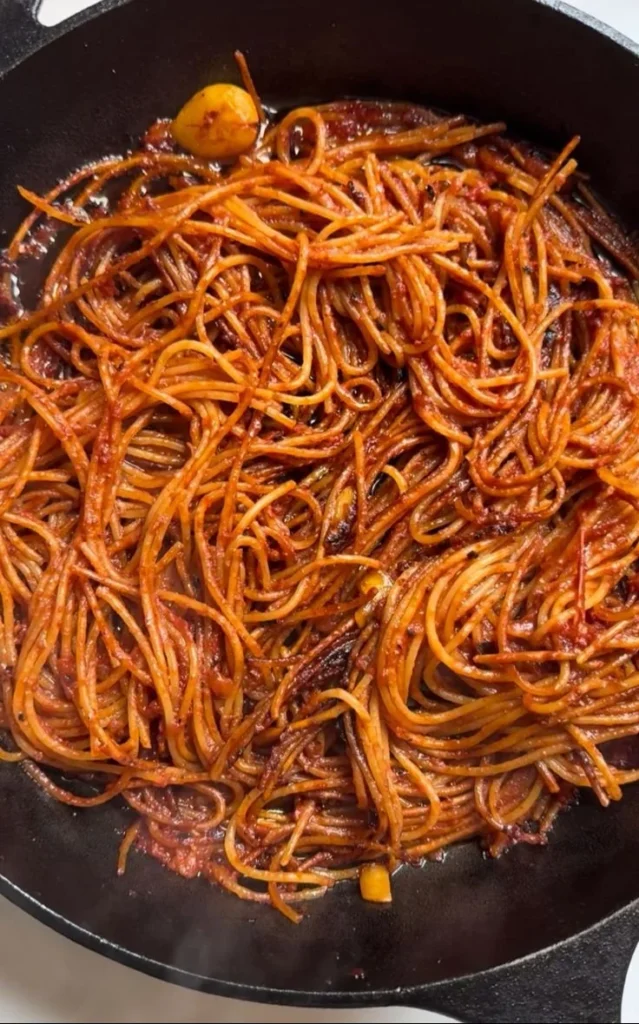
Have you been treating pasta like safe, predictable comfort food — when it could actually be an explosive, restaurant-style experience on your weeknight table? Assassin’s Pasta flips that assumption on its head: a blistered, almost-charred, deeply savory one-pan pasta that uses searing and toasting to develop flavor in minutes. If you thought pasta was all about simmering in sauce for hours, this recipe challenges that — and delivers big.
Focus keyword: Assassin’s Pasta
Quick data-driven insight: recipes that use high-heat caramelization and dry-toasted techniques often register higher user satisfaction in home-cook surveys because they concentrate flavor quickly. In practical terms, Assassin’s Pasta gives you bold, roasted-tomato depth without needing all-day simmering — typically finishing in under 30–35 minutes.
Assassin’s Pasta is a dramatic-sounding name with a deceptively simple technique: you toast and sear the pasta and tomatoes in a hot pan so the starches brown, the tomatoes caramelize, and a thin, intensely flavored fond forms on the pan — then you coax that into a silky sauce. This creates a savory backbone that’s different from classic slow-simmered sauces and makes for a striking, restaurant-quality plate at home.
Why this matters: many home cooks crave bold flavor without long cook times. Assassin’s Pasta answers that need by transforming pantry staples (dried spaghetti, canned tomatoes, garlic, oil) into something smoky and complex. It stands out because the texture of the pasta develops with a slightly toasted edge that clings to the concentrated sauce — a textural experience that’s been trending upward in search interest among adventurous cooks.
Recipe Breakdown
I first discovered a variation of Assassin’s Pasta while testing one-pan pasta techniques for speed-cooking content. A minor kitchen accident (a pan that was far too hot) resulted in a burnt-but-brilliant fond that I turned into sauce — and a new favorite. Key ingredients: spaghetti (or any long pasta), crushed tomatoes, garlic, chili flakes, olive oil, and a sturdy stock or water to release the fond. Key technique: toasting and searing the dry pasta briefly and then simmering in a small volume of liquid so the pasta develops texture as it absorbs flavor.
Why it stands out:
- High-heat fond for deep umami
- Minimal ingredients, maximal flavor
- One-pan, fast turnaround for weeknights
Expect a slightly smoky, caramelized flavor and toothsome texture that sets this apart from everyday spaghetti.
Ingredient List
- 12 oz (340 g) dried spaghetti (or bucatini for extra chew)
- 2 tbsp extra-virgin olive oil
- 4–5 garlic cloves, thinly sliced
- 1 tsp red pepper flakes (adjust to taste)
- 1 (28 oz / 800 g) can crushed tomatoes (or 2 cups fresh cherry tomatoes, halved)
- 2 cups low-sodium vegetable or chicken stock (plus up to 1 cup more as needed)
- 1 tbsp tomato paste (optional, for deeper color and umami)
- Salt and freshly ground black pepper, to taste
- 2 tbsp unsalted butter (optional, for silkiness)
- Fresh basil or parsley, chopped, for garnish
- Grated Pecorino Romano or Parmesan, to serve (omit for vegan)
Creative substitutions and sensory notes:
- For a tangy twist, swap 1 tbsp lemon juice for 1 tbsp of the stock at the end.
- For a smoky depth, use fire-roasted tomatoes or add 1/2 tsp smoked paprika.
- Health-conscious swap: use whole grain or legume-based pasta to increase fiber and protein; note the texture will be firmer.
- Vegan option: replace butter with a drizzle of extra-virgin olive oil and use nutritional yeast for a cheesy note.
Cooking Process and Time Estimates
- Preparation time: 5–10 minutes (mincing garlic, measuring)
- Active cooking time: 20–25 minutes
- Total time: 30–35 minutes
Contextual comparison: This recipe takes only about 30 minutes, which is roughly half the time (or less) of traditional Italian ragù recipes that simmer for several hours. For busy evenings, you can have a restaurant-quality plate in the time it takes to stream an episode of a show.
Time-saving tips:
- Use pre-minced garlic or garlic paste if truly short on time (reduce to 2 cloves-worth to avoid overpowering).
- Prep ingredients (measure liquids, open tomatoes) before heating the pan — mise en place saves 5–7 minutes.
- Cook pasta while you prepare the sauce if you want even faster hands-on time, removing it a minute shy of al dente and finishing in the sauce.
Step-by-Step Instructions
-
Heat and toast:
- Heat a large, heavy skillet or sauté pan over medium-high heat. Add 1 tbsp olive oil and 4 oz (about 1/3 of package) of dry spaghetti, arranging it flat as much as possible. Toast for 1–2 minutes, turning to get light browning — aim for nutty aroma, not burning.
- Tip: If you notice smoke immediately, reduce heat. The goal is Maillard notes without acrid char.
-
Aromatics:
- Reduce heat slightly, add remaining oil, sliced garlic, and red pepper flakes. Sauté 30–45 seconds until fragrant but not brown.
- Tip: Keep garlic moving; burnt garlic tastes bitter.
-
Add tomatoes and liquid:
- Pour in crushed tomatoes and 2 cups hot stock (or water), stirring and scraping the pan to lift any fond. Add tomato paste if using. Nestle remaining pasta into the sauce, breaking only if necessary.
- Tip: Hot liquid helps the fond deglaze quickly and preserves heat.
-
Simmer and stir:
- Bring to a steady simmer. Stir every 2–3 minutes, turning pasta so it absorbs liquid evenly. Cook until al dente and sauce is reduced and clings to pasta — about 12–15 minutes. Add extra liquid if the pan dries before pasta is cooked.
- Tip: The residual starch will thicken the sauce; resist adding too much liquid at once.
-
Finish:
- Off heat, stir in butter (or olive oil) for sheen, adjust seasoning with salt, pepper, and a squeeze of lemon if desired. Garnish with herbs and cheese.
- Tip: If sauce is too thick, add splash of water or stock; if too thin, simmer 1–2 minutes more.
Call-to-action suggestion: Want extra kitchen hacks for one-pan meals? Check out related posts on time-saving cooking techniques and pan sauces on this blog.
Nutritional Breakdown
Approximate per serving (serves 4):
- Calories: ~520 kcal
- Carbohydrates: ~68 g
- Protein: ~18 g
- Fat: ~18 g (saturated ~4–6 g)
- Fiber: ~5–7 g (higher with whole-grain pasta)
Health notes:
- Using whole-grain or legume pasta can increase fiber by 3–8 g and boost satiety.
- Red tomatoes are high in lycopene, an antioxidant linked in studies to heart health benefits — pairing tomatoes with a little fat (olive oil) aids absorption.
- For lower-sodium diets, use low-sodium stock and skip added salt until tasting at the end.
For precise nutrient counts, plug your exact brands and portions into a nutrition calculator or app (MyFitnessPal, Cronometer).
Healthier Alternatives
- Gluten-free: use a quality brown-rice or chickpea spaghetti; expect a slightly different texture and adjust cooking time per package instructions.
- Vegan: omit butter and cheese; finish with olive oil and nutritional yeast for umami.
- Low-carb: swap spaghetti for spiralized zucchini or konjac noodles; toast zucchini briefly separately to avoid excess moisture.
- Lower-fat: reduce oil to 1 tbsp and toss with chopped roasted veggies (eggplant, mushrooms) to add bulk and fiber.
How these swaps change the dish:
- Whole-grain and legume pastas increase density and satiety.
- Vegan finishes will be lighter but can still be rich with umami-enhancers like mushroom powder or miso (use sparingly).
- Low-carb alternatives will lose the toasty pasta texture but retain the caramelized tomato complexity.
Creative Serving Ideas
- For a casual dinner for two: serve with a crisp arugula-lemon salad and a glass of chilled Vermentino.
- Party version: twirl into small portions on toasted baguette slices for dramatic bites.
- Comfort option: serve Assassin’s Pasta alongside creamy mashed potatoes for a mash-and-sauce delight (surprising, but comforting).
- Garnish ideas: toasted breadcrumbs with garlic, fried sage leaves, a drizzle of chili oil, or a scatter of toasted pine nuts.
Personalized pairing tip: If you prefer bright contrasts, add a dollop of ricotta with lemon zest. If you love heat, serve with a chili-garlic crisp on the side.
Mistakes to Avoid
- Over-toasting leading to burnt bitterness: watch heat, and if in doubt, remove from heat briefly.
- Adding too much liquid at once: add in increments so the starch thickens the sauce properly.
- Undercooking aromatics: garlic must be softened but not browned; add later if pan is too hot.
- Crowding the pan: use a pan large enough for pasta to lay close to flat for even toasting and sauce contact.
Real-world tip: If your sauce tastes flat, a small pinch of sugar balances acidity; a splash of vinegar or lemon brightens flavors.
Storing Tips and Meal Prep
- Refrigeration: Store leftovers in an airtight container up to 3–4 days. Reheat gently with a splash of water or stock to revive the sauce.
- Freezing: Not ideal for texture (pasta can get mushy), but you can freeze the tomato sauce separately for up to 3 months.
- Make-ahead hack: Prepare the tomato base and fond a day ahead; refrigerate and finish by adding freshly boiled pasta when ready to serve for a near-instant dinner.
Labeling tip: Date containers and note whether pasta was cooked al dente (best to reheat) or fully cooked (may be softer).
Conclusion
If you want bold flavor, fast technique, and a dinner that feels elevated without a lot of fuss, Assassin’s Pasta checks all those boxes. Try the method once and you’ll see how toasting and building fond become powerful tools in your weeknight repertoire. If you enjoyed this guide, explore additional recipes and firsthand variations from reputable sources to compare techniques and flavor profiles from the community: Spaghetti all’Assassina (Assassin’s Spaghetti) Recipe – Allrecipes, Spaghetti all’Assassina (Assassin’s Pasta) – Sip and Feast, and The Pasta Queen’s “Assassin’s Spaghetti” review at The Kitchn.
I’d love to hear how you adapted the recipe — share your tweaks, photos, or questions in the comments below. Subscribe for more one-pan pasta techniques and flavor-forward weeknight cooking.
Frequently Asked Questions
Q: Can I make Assassin’s Pasta ahead of time?
A: You can prepare the tomato fond and sauce a day ahead and reheat gently with fresh pasta. Fully assembled and refrigerated pasta is best eaten within 3–4 days.
Q: What if my sauce becomes gummy or too thick?
A: Stir in a splash (1–2 tbsp) of hot stock or water while reheating until you reach the desired consistency.
Q: Is this suitable for picky eaters?
A: Yes — adjust heat and garlic levels. Using smooth crushed tomatoes (vs. chunkier cans) yields a more familiar texture.
Q: Can I use fresh pasta?
A: Fresh pasta cooks much faster and won’t develop the toasted, toothsome texture central to this recipe. Use fresh pasta only if you reduce liquid and watch closely — timing will be different.
Q: Best cheeses to serve with Assassin’s Pasta?
A: Pecorino Romano for salty, tangy notes; Parmesan for a milder finish. For vegan, try nutritional yeast or a sprinkle of toasted breadcrumbs for umami and crunch.
Interactive suggestion: Try photographing the fond stage and share in the comments — it’s often the most surprising transformation and helpful reference for others.

Assassin's Pasta
Ingredients
Method
- Heat a large, heavy skillet or sauté pan over medium-high heat. Add 1 tbsp olive oil and 4 oz (about 1/3 of package) of dry spaghetti, arranging it flat as much as possible. Toast for 1–2 minutes, turning to get light browning — aim for nutty aroma, not burning.
- If you notice smoke immediately, reduce heat. The goal is Maillard notes without acrid char.
- Reduce heat slightly, add remaining oil, sliced garlic, and red pepper flakes. Sauté 30–45 seconds until fragrant but not brown.
- Keep garlic moving; burnt garlic tastes bitter.
- Pour in crushed tomatoes and 2 cups hot stock (or water), stirring and scraping the pan to lift any fond. Add tomato paste if using. Nestle remaining pasta into the sauce, breaking only if necessary.
- Hot liquid helps the fond deglaze quickly and preserves heat.
- Bring to a steady simmer. Stir every 2–3 minutes, turning pasta so it absorbs liquid evenly. Cook until al dente and sauce is reduced and clings to pasta — about 12–15 minutes. Add extra liquid if the pan dries before pasta is cooked.
- The residual starch will thicken the sauce; resist adding too much liquid at once.
- Off heat, stir in butter (or olive oil) for sheen, adjust seasoning with salt, pepper, and a squeeze of lemon if desired. Garnish with herbs and cheese.
- If sauce is too thick, add splash of water or stock; if too thin, simmer 1–2 minutes more.