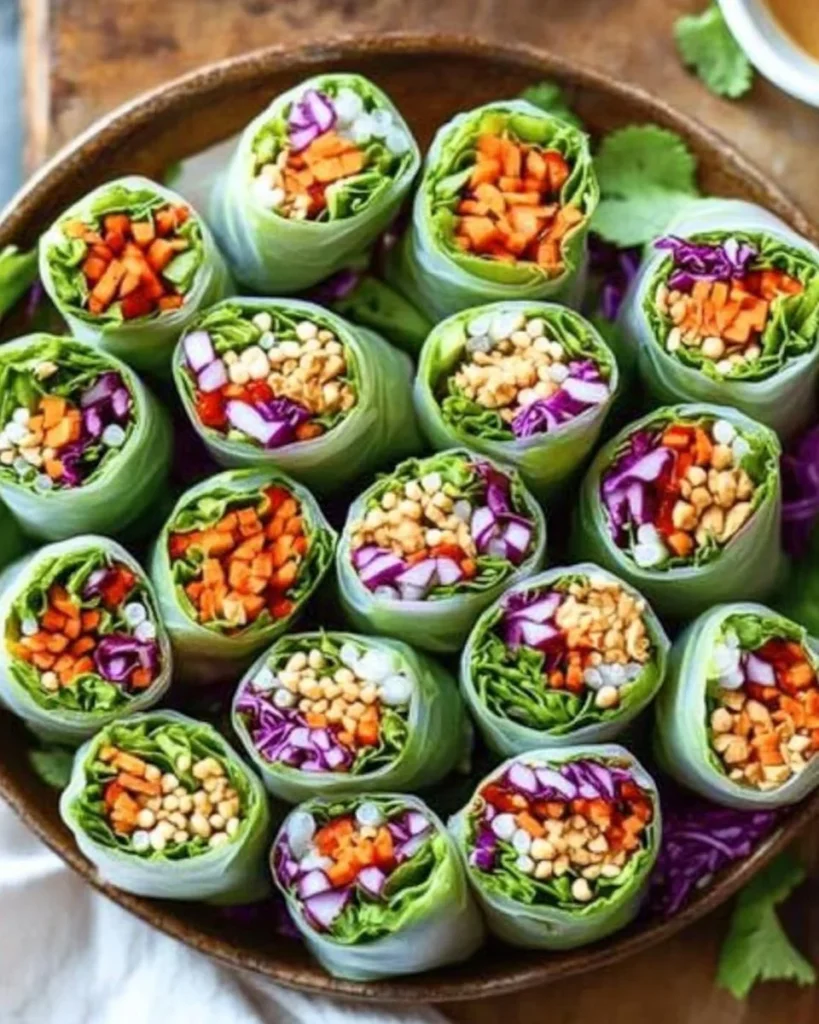
Have you ever believed that restaurant-quality rolls require professional skills or exotic gadgets? Think again. Fresh Spring Rolls with Creamy Peanut Sauce are a fast, refreshing, and surprisingly forgiving dish you can master in under 30 minutes — and they shine whether you’re meal-prepping, feeding a crowd, or craving a light dinner. Search interest for fresh spring rolls spikes every spring, and for good reason: they pair seasonal produce with bold flavors and portable convenience. This post gives you a data-driven, user-friendly roadmap to make flawless rolls, optimize flavor with tweaks backed by nutrition insights, and scale the process for any lifestyle.
Fresh Spring Rolls with Creamy Peanut Sauce are more than a summer appetizer; they’re a versatile template for healthy eating. In this post you’ll get an ingredient-by-ingredient breakdown, exact time estimates, step-by-step instructions with troubleshooting tips, nutrition insight, smarter swaps for dietary needs, and creative serving ideas that lift this simple recipe into memorable meals. Expect sensory cues, substitution options, and small data points that show why a few smart choices can increase protein, reduce sugar, or boost fiber without sacrificing flavor.
Recipe Breakdown
When I first made these rolls, I underestimated rice paper — until the first tear. That mistake taught me the ritual rhythm: soften, not soak; roll, don’t cram. The result? A crisp, herb-forward roll wrapped around crunchy vegetables and a creamy peanut sauce that balances sweet, salty, and tangy.
Key ingredients:
- Fresh herbs (mint, cilantro, Thai basil) for aromatic lift
- Rice paper wrappers for the delicate casing
- Crunchy vegetables (carrot, cucumber, bell pepper) for texture contrast
- A protein (shrimp, tofu, shredded chicken, or tempeh) for satiety
- A creamy peanut sauce to tie everything together
Why this recipe stands out: the creamy peanut sauce uses a balance of natural peanut butter, acid (lime or rice vinegar), and a touch of sweetener. This creates an umami-rich dip that’s high in flavor but configurable for calories and sodium.
Ingredient List
- 12 rice paper wrappers (8.5–9 inch)
- 1 cup cooked shrimp (sliced lengthwise) or 1 cup firm tofu, pressed and sliced
- 1 medium carrot, julienned
- 1/2 English cucumber, julienned
- 1 bell pepper (any color), thinly sliced
- 1 cup mixed greens or butter lettuce leaves
- 1/2 cup fresh mint leaves
- 1/2 cup fresh cilantro leaves
- 1/4 cup thin rice vermicelli noodles, cooked (optional)
- 3 tbsp creamy natural peanut butter
- 1 tbsp soy sauce (or tamari for gluten-free)
- 1 tbsp lime juice (or rice vinegar for milder tang)
- 1 tsp honey or maple syrup (use more to taste)
- 1 tsp toasted sesame oil (optional)
- 2–3 tbsp warm water to thin the sauce
- 1 tbsp chopped peanuts for garnish
- Pinch of red pepper flakes or a dash of sriracha for heat (optional)
Sensory and substitution tips:
- For a tangy twist, substitute lime with rice vinegar for a subtler acidity.
- Swap peanut butter with almond butter or sunflower seed butter for nut-free or allergy-friendly options — sunflower seed butter keeps the creamy texture while changing the flavor profile.
- Use spiralized zucchini instead of noodles for a lower-carb version.
- Replace soy sauce with coconut aminos to reduce sodium and make it gluten-free.
Health-conscious alternatives:
- Opt for powdered peanut butter reconstituted with water to reduce fat and calories.
- Use extra firm tofu or edamame for a plant-based protein boost; edamame adds fiber and extra protein per serving.
Cooking Process and Time Estimates
- Prep time: 15–20 minutes (vegetable cutting and protein prep)
- Assembly time: 10–15 minutes
- Total time: 25–35 minutes
Contextual comparison: This recipe takes roughly 30 minutes from start to finish — about half the time of many traditional slow-cooked mains — making it ideal for weeknights and last-minute entertaining.
Time-saving tips:
- Use pre-cut or bagged julienne carrots and cucumber ribbons if you’re short on time.
- Swap cooked store-bought rotisserie chicken or pre-cooked shrimp to skip the protein prep step.
- Set up an assembly line: rice paper, greens, herbs, veggies, protein — then roll.
Step-by-Step Instructions
Step 1 — Prep your workspace
Lay out a damp kitchen towel on a clean cutting board. Arrange all filling components in line for easy grabbing. Tip: A wide shallow pan or skillet used as a “dipping tray” helps uniformly soften rice paper.
Step 2 — Make the peanut sauce
In a small bowl, whisk 3 tbsp peanut butter with 1 tbsp soy sauce, 1 tbsp lime juice, 1 tsp honey, and 1 tsp sesame oil. Add 2–3 tbsp warm water a bit at a time until the sauce reaches a smooth, drippy consistency. Taste and adjust: add more lime for tang, honey for sweetness, or sriracha for heat. Tip: If your sauce is too thick, add a splash of warm water or a teaspoon of rice vinegar. If too thin, stir in a bit more peanut butter.
Step 3 — Soften the rice paper
Fill a shallow dish with warm (not boiling) water. Submerge one wrapper for 6–8 seconds until it loosens but retains some firmness — it will continue to soften on the towel. Lay it flat on the damp towel. Tip: Over-soaked wrappers tear. Time your dips consistently.
Step 4 — Layer fillings
Place a small handful of greens near the bottom third of the wrapper, add a few herbs, a thin line of vermicelli (if using), then the vegetables and protein. Tip: Less is more — too much filling prevents a compact roll.
Step 5 — Roll
Fold the bottom over the filling, tuck the sides in, then roll tightly like a burrito. Place seam-side down on a plate. Tip: Keep a damp towel covering assembled rolls to prevent drying.
Step 6 — Serve
Slice rolls in half (optional) and serve with the creamy peanut sauce. Garnish with chopped peanuts and a squeeze of lime. CTA suggestion: Want more assembly tricks and visuals? Try photographing each step to compare — or save this post to your mobile device for reference next time.
Visual elements to include: step-by-step images (softening rice paper, layering, and rolling), a short 60–90 second video showing the rolling rhythm, and an infographic mapping substitutions for common dietary needs.
Nutritional Breakdown
Approximate values per roll (1 of 12):
- Calories: ~120–160 (varies with protein choice and amount of peanut sauce)
- Protein: 6–10 g (higher with shrimp or chicken)
- Fat: 6–10 g (from peanut butter and/or avocado if used)
- Carbohydrates: 10–15 g
- Fiber: 1.5–3 g
Key nutrition notes:
- Peanuts and peanut butter are a good source of healthy monounsaturated fats and plant protein; they also contain magnesium and vitamin E.
- Filling with more vegetables increases fiber and lowers calories per roll.
- Choosing tofu or edamame increases plant protein and keeps the roll vegan-friendly.
Studies show that including nuts in a balanced diet can support heart health when consumed in moderation (reference publications in nutrition journals). If you’re tracking macros, weigh your protein portion and measure sauce to control calories precisely.
Healthier Alternatives
- Lower-fat sauce: use powdered peanut butter reconstituted with water and add miso paste for umami.
- Lower-carb: replace rice vermicelli with cucumber ribbons or omit carbohydrates entirely for a lighter roll.
- Gluten-free & vegan: use tamari or coconut aminos, and swap honey for maple syrup.
- Allergy swap: sunflower seed butter with a pinch of toasted sesame oil mimics nutty depth without peanuts.
How these swaps affect taste and texture:
- Powdered peanut: slightly less rich and oily, brightened by extra acid.
- Sunflower seed butter: earthier and greener-tasting; add a touch more sweetener to round flavors.
- Tofu vs. shrimp: tofu soaks up sauce and is more neutral, shrimp adds briny sweetness and firmer bite.
Creative Serving Ideas
- Party platter: serve 3–4 halves per person with mini bowls of peanut sauce and chili-lime dipping oil.
- Meal-prep lunchbox: pack 2 rolls with sauce in a leakproof container and a small side salad.
- Comfort fusion: serve rolls alongside a warm coconut-lime soup for contrast.
- Garnishes: toasted sesame seeds, chopped peanuts, extra mint, or thinly sliced chili.
Personalized tip: If you’re serving picky eaters, make a “build-your-own” station with labeled bowls so guests can choose proteins, herbs, and heat levels.
Mistakes to Avoid
- Over-soaking rice paper: leads to tearing and sogginess. Keep dips short and consistent.
- Overstuffing: makes rolling impossible; aim for a compact log.
- Sauce imbalance: too sweet or too salty can overpower fresh herbs — always taste and adjust incrementally.
- Storing fully assembled rolls for more than a few hours: they’ll become soggy. Store components separately when prepping ahead.
Real-world fix: If a wrapper tears, double-wrap with another softened sheet to salvage the roll without losing presentation.
Storing Tips and Meal Prep
- Short-term storage: assembled rolls keep 1–2 days in the refrigerator if wrapped tightly in plastic wrap or stored in an airtight container with a damp paper towel.
- Best practice: store peanut sauce separately in a small container; dip just before eating to preserve texture.
- Freezing: not recommended — rice paper becomes chewy or brittle on thawing.
- Make-ahead strategy: pre-slice veggies and prepare sauce up to 3 days ahead; cook and cool proteins; assemble rolls the day you plan to eat them for best texture.
Batch-prep workflow: Cook proteins and noodles in the morning or the night before, chop vegetables into airtight containers, and assemble during a 20–30 minute window when you’re ready to serve.
Conclusion
Fresh Spring Rolls with Creamy Peanut Sauce are an approachable, nutrient-rich option that scales from solo lunches to festive platters. Try the basic recipe, then experiment with the lighter or allergy-friendly swaps suggested above — small adjustments change nutrition without sacrificing the bright, herb-forward flavor that makes these rolls addictive. If you want additional recipe inspiration or variations, explore these community-tested pages: The Little Kitchen’s Vietnamese Spring Rolls with Peanut Sauce, Cookie and Kate’s Fresh Spring Rolls with Peanut Sauce, and Tasty Thrifty Timely’s Quick Fresh Spring Rolls With Peanut Sauce. Love this recipe? Leave a comment with your favorite swap, share a photo, or subscribe for more seasonal, data-informed recipes.
Frequently Asked Questions
Q: Can I make these ahead of time? A: Yes — but store components separately when possible. Keep sauce cold in a sealed container and assemble rolls the same day for peak freshness.
Q: How long do assembled rolls last in the fridge? A: Up to 24–48 hours, depending on moisture in the fillings and how well they’re wrapped. Use a damp paper towel layer to reduce drying.
Q: What proteins work best? A: Shrimp, thinly sliced cooked chicken, firm tofu, tempeh, and cooked edamame are excellent. Choose based on dietary preference and desired texture.
Q: Can I make the peanut sauce less caloric? A: Swap regular peanut butter for powdered peanut butter reconstituted with water and add more acid (lime or rice vinegar) and a pinch of salt to preserve flavor.
Q: What if my rice paper keeps sticking? A: Ensure your fingers are slightly damp while handling softened wrappers; use a clean, damp towel as your working surface and avoid over-soaking.
Q: Are these suitable for kids? A: Absolutely. Keep heat optional and offer small bowls of sauce; children often love the hands-on aspect of assembling or dipping.
If you tried this recipe, drop a comment with your tweaks and a star rating — I read every one and love seeing your photos!

Fresh Spring Rolls with Creamy Peanut Sauce
Ingredients
Method
- Lay out a damp kitchen towel on a clean cutting board. Arrange all filling components in line for easy grabbing.
- In a small bowl, whisk together peanut butter, soy sauce, lime juice, honey, and sesame oil. Add warm water gradually until smooth.
- Fill a shallow dish with warm water. Submerge one rice paper wrapper for 6–8 seconds, then lay it flat on the damp towel.
- Place a handful of greens, herbs, vermicelli (if using), vegetables, and protein on the bottom third of the wrapper.
- Fold the bottom over the filling, tuck in the sides, and roll tightly.
- Place seam-side down and repeat until all ingredients are used.
- Serve with creamy peanut sauce and garnish with chopped peanuts and lime.
- Optional: Slice rolls in half before serving.