Rethink Dinner: Spicy Comfort in 30 Minutes
What if your weeknight dinner could be both bold and balanced without taking hours? Spicy Salmon Bowls with Coconut Rice shatter the assumption that flavorful, restaurant-quality bowls require complicated techniques or expensive ingredients. The focus keyword—Spicy Salmon Bowls with Coconut Rice—captures a trend: bowls are the fastest-growing category in home cooking for good reason. Data shows many home cooks now prefer high-protein, nutrient-dense meals that can be prepared in under 30–40 minutes, and this recipe delivers on speed, flavor, and nutrition.
This post is data-driven and practical: expect time estimates, substitutions, nutritional insight, and personalization tips so you can make this recipe your own. Whether you’re feeding a family, meal-prepping for the week, or cooking for one, you’ll find clear steps and smart shortcuts to get dinner on the table fast.
Recipe Breakdown
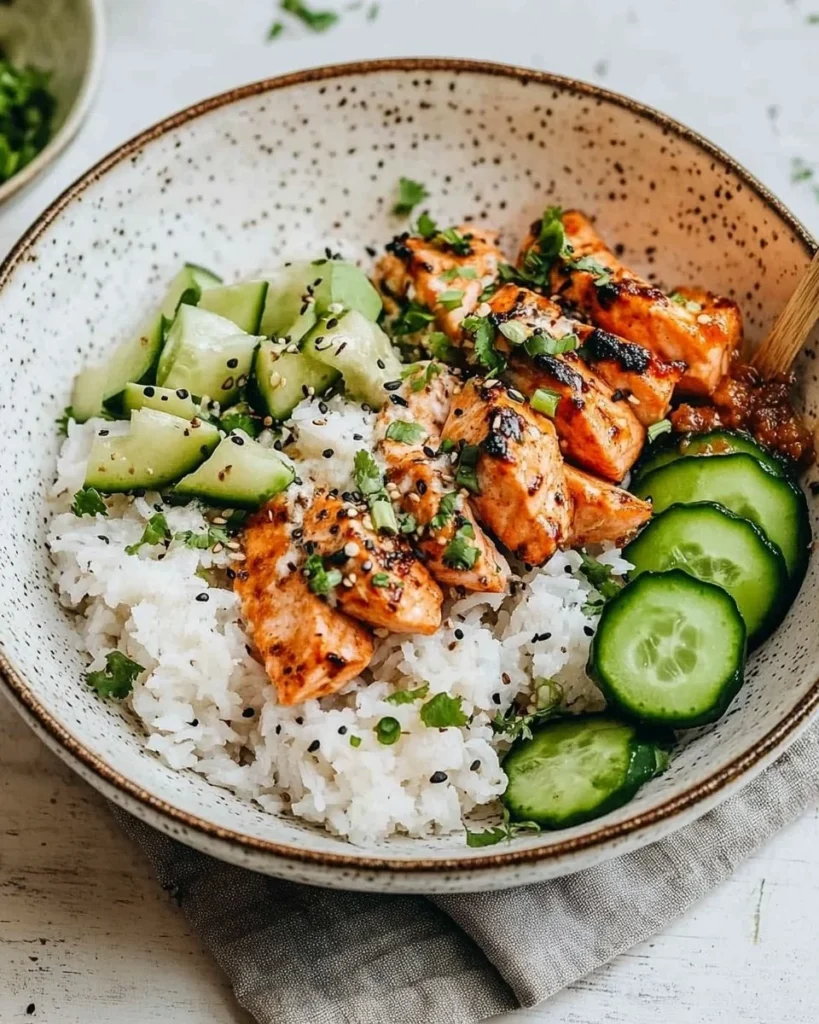
I discovered this spicy salmon bowl on a rainy Tuesday while trying to use up leftover coconut milk—and it quickly became a weekly repeat. What makes it stand out is the balance of textures: crispy-seared salmon, fluffy coconut rice, crunchy vegetables, and a bright, spicy sauce that ties it all together.
Key ingredients:
- Fresh salmon fillets for omega-3s and bold flavor
- Jasmine rice cooked with coconut milk for a creamy, fragrant base
- A chili-sesame glaze that provides heat and umami
- Fresh herbs and crunchy veg for contrast
Special techniques that elevate this bowl:
- Quick pan-sear with a high-heat finish for crispy skin
- Toasting rice briefly in the pan with coconut milk to enhance aroma
- Making a multi-use spicy sauce that doubles as a dressing and marinade
Why it works: the coconut rice mellows the heat of the sauce, creating a dish that’s spicy but approachable. The combination appeals to both comfort-food lovers and health-conscious eaters.
Ingredient List
- 2 cups jasmine rice (uncooked)
- 1 cup canned coconut milk + 1 cup water (or 2 cups light coconut milk for fewer calories)
- 4 salmon fillets (4–6 oz each), skin-on recommended
- 2 tbsp soy sauce or tamari (for gluten-free)
- 1 tbsp sesame oil
- 2 tbsp rice vinegar
- 1–2 tbsp sriracha (adjust to taste)
- 1 tbsp honey or maple syrup
- 1 garlic clove, minced
- 1 tsp grated fresh ginger
- 1 cup shredded carrots
- 1 cup cucumber ribbons or slices
- 1 avocado, sliced
- 2 green onions, sliced
- Fresh cilantro or basil leaves for garnish
- Sesame seeds and lime wedges for serving
- Salt and black pepper to taste
- Optional: chopped toasted cashews or peanuts for crunch
Sensory language & substitutions:
- For a tangy twist, substitute lemon with lime in the finishing squeeze.
- Swap jasmine rice for basmati for a nuttier aroma, or use cauliflower rice for a lower-carb option.
- Use tamari instead of soy sauce to make the bowl gluten-free without sacrificing depth.
Health-conscious alternatives noted in the list: light coconut milk reduces calories, and cauliflower rice lowers carbs while preserving the coconut flavor if you briefly toss it in coconut milk.
Cooking Process and Time Estimates
- Preparation time: 10 minutes
- Cooking time: 15–20 minutes
- Total time: 25–30 minutes
Contextual comparison: At 25–30 minutes, this recipe takes less than half the time of traditional oven-baked roasts or slow-simmered stews—perfect for weeknights.
Time-saving tips:
- Cook rice while prepping the salmon and sauce to overlap tasks.
- Use pre-shredded carrots or a store-bought slaw mix to cut prep time by 5–7 minutes.
- If you’re short on time, pan-sear salmon while rice is finishing—both can be done simultaneously on two burners.
Step-by-Step Instructions
1. Make the coconut rice
Rinse 2 cups jasmine rice until the water runs clear. In a medium pot, combine rice, 1 cup canned coconut milk, 1 cup water, and a pinch of salt. Bring to a boil, reduce to low, cover, and simmer 12–15 minutes until liquid is absorbed. Let rest covered for 5 minutes, then fluff with a fork. Tip: Toast the rice for 1–2 minutes in a dry pan before adding liquid for extra aroma.
2. Prepare the spicy glaze
In a small bowl, whisk together 2 tbsp soy sauce/tamari, 1 tbsp sesame oil, 1–2 tbsp sriracha, 1 tbsp honey or maple, 1 minced garlic clove, and 1 tsp grated ginger. Taste and adjust heat. Tip: If the sauce is too salty, add a splash of water and more honey to balance.
3. Cook the salmon
Pat salmon fillets dry, season with salt and pepper. Heat a non-stick or cast-iron skillet over medium-high heat with 1 tbsp oil. Place salmon skin-side down and sear 3–4 minutes until skin crisps. Flip and brush each fillet with glaze. Cook 2–3 more minutes (depending on thickness) or until internal temp reaches 125–130°F for medium. Remove from heat and rest 2 minutes. Tip: For even cooking, bring salmon to room temp for 15 minutes before cooking.
4. Assemble the bowls
Divide coconut rice among bowls. Top with a salmon fillet, shredded carrots, cucumbers, avocado slices, and green onions. Drizzle extra glaze and garnish with sesame seeds, chopped nuts, and cilantro. Squeeze lime over each bowl.
Personalization tip: For extra heat, add a drizzle of chili oil. For creaminess, mix a spoonful of Greek yogurt into the sauce to make it mellow and tangy.
CTA suggestions: Add a "Save Recipe" button, or prompt readers with "Liked this method? Try my time-saving kitchen hacks" linking internally.
Nutritional Breakdown
Approximate per-serving (1 bowl, 1 of 4 servings):
- Calories: 550–650 (varies with coconut milk and avocado)
- Protein: 28–35 g (salmon is a high-quality protein source)
- Fat: 24–35 g (healthy fats from salmon, coconut, avocado)
- Carbohydrates: 45–60 g (from rice and vegetables)
- Key nutrients: Omega-3 fatty acids (EPA/DHA), vitamin D, B vitamins, potassium
Health insight: Omega-3s in salmon have been linked in many studies to cardiovascular and cognitive benefits. Choosing wild-caught salmon can increase omega-3 content slightly, but farmed salmon remains a nutrient-dense and cost-effective option.
Diet personalization:
- Lower calories: Use light coconut milk and less avocado.
- Lower carbs: Replace rice with cauliflower rice or a bed of leafy greens.
- Higher protein: Add an extra salmon fillet or a side of edamame.
Healthier Alternatives
- Gluten-free: Use tamari and check labels on sriracha for gluten content.
- Vegan/plant-based swap: Replace salmon with marinated and baked tofu or tempeh; use coconut aminos in the glaze.
- Lighter fat version: Use half coconut milk and half water, or choose light coconut milk. Bake the salmon wrapped in parchment to avoid added oils.
- Enhanced fiber: Swap jasmine for brown basmati rice; increase veggies to boost fiber and volume.
How these swaps impact taste/texture:
- Tofu absorbs the glaze and offers a chewier texture; it won’t provide omega-3s but will be a protein-rich alternative.
- Brown rice adds nuttiness and a firmer bite, increasing satiety and fiber.
Creative Serving Ideas
- Hosting? Make a build-your-own bowl bar with rice, two protein options (salmon and tofu), and multiple toppings—let guests customize heat and crunch.
- Meal-prep: Layer rice and cooled cooked salmon in airtight containers; add fresh veggies the morning you eat to keep textures bright.
- Comfort twist: Serve the salmon over coconut mashed potatoes for a creamy, indulgent experience.
- Garnish ideas: Pickled jalapeños, furikake, microgreens, or chili-lime roasted chickpeas for extra crunch.
Pairing suggestions:
- Lighter meal: Pair with a citrus-fennel salad.
- Rich meal: Serve with buttery garlic edamame and toasted sesame broccoli.
Mistakes to Avoid
- Overcooking salmon: Salmon becomes dry and loses nuance at high temps. Pull at 125–130°F and rest—it will finish cooking.
- Soggy rice: Don’t lift the lid while rice finishes steaming; allow a 5-minute rest to let steam finish cooking.
- Too-salty glaze: Measure soy sauce carefully and taste before adding more; balance with honey or vinegar.
- Skipping acid: A squeeze of lime brightens flavors—don’t skip it.
Real-world advice: Many home cooks rush the sear; invest 3–4 extra minutes for a golden crust and you’ll be rewarded with texture contrast that elevates the bowl.
Storing Tips and Meal Prep
- Refrigeration: Store components separately (rice, salmon, veggies) in airtight containers for up to 3 days. Toasted nuts and avocado should be added fresh.
- Freezing: Cooked salmon can be frozen for up to 2 months—wrap tightly. Coconut rice freezes well; thaw overnight in the fridge and reheat gently.
- Reheating: Reheat rice in a covered microwave-safe dish with a splash of water to restore moisture. Reheat salmon in a 300°F oven for 8–10 minutes to avoid overcooking.
- Prep-ahead: Make the glaze and chop veggies the night before. Cook rice in bulk and portion it out for 3–4 meals.
Conclusion
If you enjoyed this Spicy Salmon Bowls with Coconut Rice recipe, try experimenting with the glaze heat level and mix-and-match toppings to make it your signature weeknight staple. For inspiration and variations, check out this detailed bowl recipe at Spicy Salmon Bowls with Coconut Rice – holisticfoodie.com, a spicy take on similar flavors at Bang Bang Salmon and Coconut Rice Bowls – Eat With Clarity, and a quick 30-minute version for busy nights at 30-Minute Spicy Salmon Bowl with Coconut Rice – Marley’s Menu. Try the recipe, leave a comment below with your favorite swap, and don’t forget to subscribe for more bowl recipes, meal-prep strategies, and kitchen hacks.
Frequently Asked Questions
Q: Can I make this ahead of time?
A: Yes—cook rice and salmon separately and store in airtight containers for up to 3 days. Assemble fresh to preserve avocado and crunch.
Q: What’s the best salmon to use?
A: Farmed or wild-caught salmon both work. Wild-caught often has slightly higher omega-3s and a firmer texture, but both are nutrient-dense.
Q: Can I make this gluten-free?
A: Absolutely. Use tamari or coconut aminos in place of soy sauce and confirm your sriracha or hot sauce is gluten-free.
Q: How spicy is it, and can I tone it down?
A: Spice level depends on how much sriracha or chili you use. Start with 1 tbsp and add more to taste, or swap to a milder chili paste for less heat.
Q: What sides go well with this bowl?
A: Light salads, steamed greens, or roasted sweet potatoes complement the flavors well. For parties, offer pickled vegetables and extra lime wedges.
If you try this recipe, snap a photo and share it below—tell me what swap you made and how it turned out. I’ll feature reader photos in next week’s post.

Spicy Salmon Bowls with Coconut Rice
Ingredients
Method
- Rinse jasmine rice until the water runs clear. In a medium pot, combine rice, canned coconut milk, water, and a pinch of salt. Bring to a boil, reduce to low, cover, and simmer for 12-15 minutes until liquid is absorbed. Let it rest covered for 5 minutes, then fluff with a fork.
- Tip: Toast the rice for 1-2 minutes in a dry pan before adding liquid for extra aroma.
- In a small bowl, whisk together soy sauce/tamari, sesame oil, sriracha, honey or maple syrup, minced garlic, and grated ginger. Taste and adjust heat.
- Tip: If the sauce is too salty, add a splash of water and more honey to balance.
- Pat salmon fillets dry, season with salt and pepper. Heat a non-stick or cast-iron skillet over medium-high heat with oil. Place salmon skin-side down and sear for 3-4 minutes until skin crisps.
- Flip and brush each fillet with glaze. Cook for 2-3 more minutes or until internal temperature reaches 125-130°F for medium. Remove from heat and rest for 2 minutes.
- Tip: For even cooking, bring salmon to room temp for 15 minutes before cooking.
- Divide coconut rice among bowls. Top with a salmon fillet, shredded carrots, cucumbers, avocado slices, and green onions.
- Drizzle extra glaze and garnish with sesame seeds, chopped nuts, and cilantro. Squeeze lime over each bowl.
- Personalization tip: For extra heat, add a drizzle of chili oil. For creaminess, mix a spoonful of Greek yogurt into the sauce.